

The land of saints and Sufis, Kashmir or how we Kashmiris dub it, ‘Peer Waer’, Adobe of Saints, has not only impressed the world with its eternal scenic beauty but has employed many who would contribute to its poetry and songs, creating melodies and therefore adding an air to the lives of people.
One of the earliest and known names in this sphere we come across, is Rasul Mir.
He is one of the celebrated poets of Kashmir whose influence on the society is unparalleled. His poetic work is not restricted to a particular audience but appeals to the masses.
Rasul Mir was born in Shahabad, Anantnag district of Kashmir. Even though most scholars are certain about his place of birth, there is no confirmation on the year of the same. Interestingly, some suggest that he was alive in 1855 AD as Mehmood Gami, who was his peer, was laid to rest a few years before Mir’s demise.
The name of his native place is also authenticated in his own verse which says;
Rasul Mir chhuy Shahabad Duray,
Aem chhu trovmut ashq dukaan!
Rasul Mir of Shahabad Doore,
Has opened a shop of tears.
Yeevo ashkow cheyiv turi turay,
Mae chu mooray lalvun naar.
Come, lovers, drink cupfuls away,
I have to nurture the fire of love every day,
However, this still remains a matter of controversy. Mir at the same time has witnessed three different reigns of rule; Afgan, Sikh and Dogra. He mentions the Afgan capital, Kandahar, in one of his famous works, Bal Marayo.
While some are of opinion he was referring to the famous Kashmiri poetess Habba Khatoon, “whose name was Zun, the Kashmiri word for the moon. She was born in Chandrahar village” says K. N Dhar while quoting Mahjoor.
Sharmanda karthas aftabo,
Qandharich zun.
Kaji chani gajisay, lajisa daray
Bal marayo.
I, the full moon of Qandhara, am ashamed,
Of your brilliance, my sun,
Waiting, wilting in your remembrance,
I will wither away young.
Belonging to the family of Zamindars, he received good education and was introduced to Maktab (academy) where he was taught Persian. In spite of this, the sufi poet who is famously known as John Keats of Kashmir writes in Kashmiri, his mother tongue.
However, the beauty of his work lies in how he incorporates Persian words into Kashmiri which is embraced by a common understanding of love and longing. His poem often mentions rivers, forests, valleys, and flowers.
He mentions names of picturesque areas of Kashmir that have never failed to impress people.
Amaresh Datta, writes in The Encyclopaedia of Indian Literature, “The lyric stream of Kashmir verse runs deeper in Rasul Mir. His poems have such careless ease and abandon, such indefinable and bewitching sweetness about them that they send a strange yet delightful thrill in us.”
Rasul Mir wrote of longing, separation and the love for beloved. It is said he was in love with a Kashmiri Hindu lady named Kong and many of his ghazals are written for her. Some say that the poem ‘Kongi havtay pan…’ (Show yourself up, Kongi…) was attributed to her, and so was the famous ‘Rind Posh Maal Gindane Drai lo lo’, written in her remembrance.
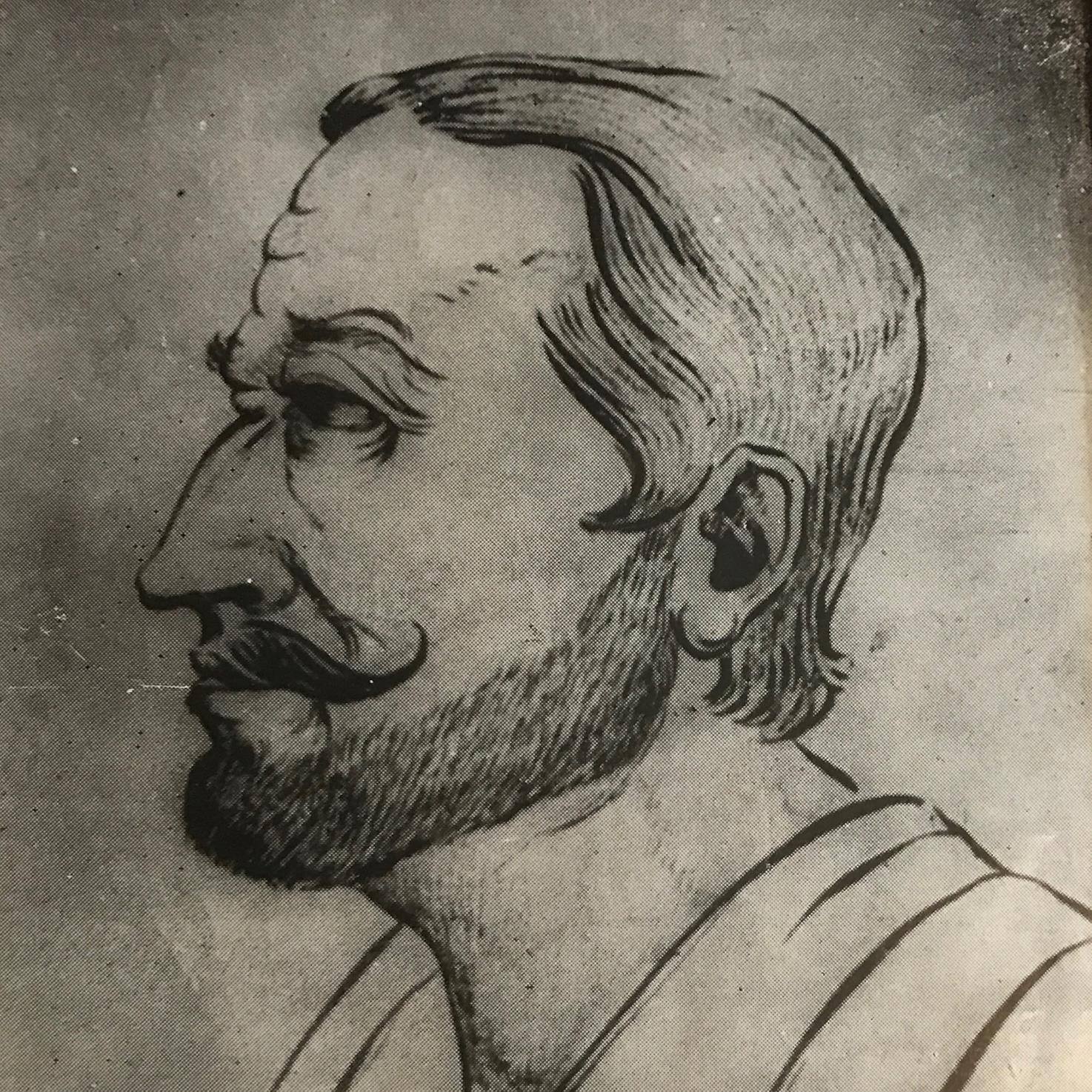
A scanned photo Sketch of Rasul Mir by Mohan Raina on the cover of ‘Rasul Mir’ by G.R Malik Sahitya Akademi, First edition, 1990.
Rasul Mir himself is described as a tall, handsome man with a fair complexion and a moustache who wore a turban which was a tradition back in time. Having a good dressing sense along with a sharp personality.
Rasul Mir writes,
Rinde poshmaal gindaney drayi lolo,
Shubi shanash chani por chhayi lolo.
The carefree lass has come out to play,
Compliments to her beauty, let us all play.
Raza henziyani kyah naz anzi gardan,
Ya ilahi cheshmi bada nishi rachtam.
Gachhi kyah kam chani bargahi lolo,
Rinde poshmaal gindaney drayi lolo.
The royal maiden is proud of her braids,
O Almighty, save her from the evil eye,
Your divinity will not be lessened in any way,
The carefree lass has come out to play.
Zal wankan bal yeli lagi shumar,
Pachh lagnas ganzran lacch tai hazara.
Tami shayi no moklan payi lolo,
Rinde poshmaal gindaney drayi lolo.
She had started counting her fine braids,
It will take her long to count them all.
The task will not finish right away,
The carefree lass has come out to play
Kala moyas takan chhay barsar,
Falila nafi molmut mushke adfar.
Henzi paran chotar tai dayi lolo,
Rinde poshmaal gindaney drayi lolo.
The black curls on her head are covered by a cap,
The fragrance of musk is all around.
Henz is being decorated by servants and maids today,
The carefree lass has come out to play.
Ronyi godu koy yamath boozum saz,
Saz bozni amut shah yandraz.
Poshmal chham posha tula dayi lolo,
Rinde poshmaal gindaney drayi lolo.
Whenever I heard the melody of the belled anklets,
Yandraz himself came to hear it.
Her delicate light body, with flowers one can weigh,
The carefree lass has come out to play.
Halqu band tal shuban nari pistan,
Ti deeshith ashkan dil loban.
Wol Rasul Mir chaney mayi lolo,
Rinde poshmaal gindaney drayi lolo.
The pretty bosom under the necklace,
Tempts lovers from everywhere.
Rasul Mir’s love for you is here to stay,
The carefree lass has come out to play.
Rasul Mir’s ghazals have been a part of Kashmir’s literary traditions and have substantially influenced it.
He is credited to bring Ghazal into Kashmiri poetry. His songs are often sung at ceremonies by women whereas men fail to admit but tend to remember it by heart. Mir’s work has not only amused previous generations, rather charms whosoever reads it.
“The Kalam (poetic work) of Rasul Mir is limited to sixty-seven poems, but he has already become an integral part of the Kashmiri oral tradition. One is not surprised by his popularity, since his diction is close to common speech. There is also great craftsmanship in his choice of sound and sense.” writes Brji B. Kachru in A History of Indian Literature (Kashmiri Literature).
Yawar Abdal, a young singer who tends to revive Kashmiri tradition through his work has already done two songs on Mir’s poetry, Bal Mareyo and Che yewan roshey both famous among youth of kashmir. He says; the latter is a tribute to the Shameema Akhtar and Rasul Mir himself whereas, the former, is inspired from the thought of composition and melody of the poem. However both share the same emotion of love and regard for Rasul Mir.
For him as he says; ‘Rasul Mir connects to my world’. For the same he recounts a beautiful verse of Ghalib which says; bebasi besabab nahi Ghalib, kuch toh hai jis ki parda-dari hai.
Rasul Mir speaks the language of love, sorrow, pain and hope. Today, the romantic poet of Kashmir rests right next to the third window of Shah-e-Hamdans shrine in Dooru, Shahabad.
Tradition says, he was buried at the mentioned place according to his own will so that people at the shrine while offering prayers would turn right and send blessings upon him too. The great poet now resides at the place where he once used to sit and write in seclusion. His gravestone bares his own verse which reads,
Rosul Chhuy Zanith deen-o-mazhab,
Rokh ta zulf chon.
Koh zani kya gav,
Kufur ta Islam, nigaro.
Rasul has conquered religion and faith,
Your face and your tresses.
What does he know about,
Blasphemy and Islam, my love?
Rasul Mir writes of longing and comforts it with romance. He articulates separation from beloved in an utmost simple yet beautiful way. He brings you back to the memories and attempts to recall your personal incidents of what you may define as Hijr, separation or longing.
His poem personifies love and longing with beautiful metaphors and similes. His work did not delve on tasavvuf or mysticism rather lays emphasis on romance and longing in particular. For this reason he is referred to as “a skilled decanter of love”.
Bal Marayo (I will wither away young), Wolay Kasturiye (Come, my love), Me chhu moorey laluvun naar (I have to nurture the fire of love every day), Salas antany baliye (Invite him home, my friend) and Rinde poshmaal happen to be some his most famous works.
It is unseemly how we Kashmiris who have so much to associate with our cultural basics tend to overshadow it with the alien values. We have forced ourselves to associate with foreign practises. We speak of the Kasheer however, we never speak in Kashmiri. Even though, It is in Kasheer and in the heart of its people, Rasul Mir lives on forever and so does his Kalaam.
References and Translation: Rasul Mir, the romantic poet of Kashmir by Dr. Shiban K. Kachru.
The post ‘Rinde poshmaal gindaney drayi lolo’: Romance, longing and Rasul Mir first appeared on Free Press Kashmir.from Free Press Kashmir https://ift.tt/3bYGTS0



0 Comments